
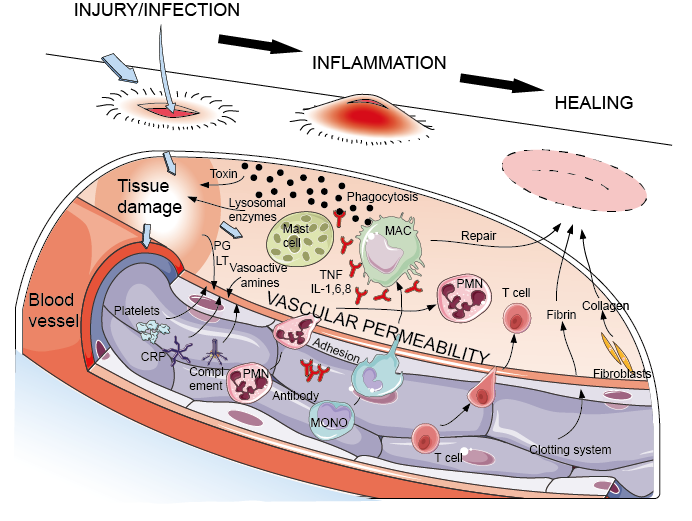
We’ve been taught to fear inflammation. We’ve been sold a narrative that inflammation itself is the problem. The word inflammation has become synonymous with the notion of bad, unwanted, and unhealthy. But this misunderstands what inflammation actually is.
Inflammation is your body’s natural healing response. When you exercise, sustain an injury, or fight infection, inflammation isolates damage, clears debris, and initiates repair. It’s essential. Even everyday metabolism involves inflammatory signalling as part of normal tissue remodeling. Inflammation isn’t something to fear, unless it’s excessive and unable to resolve naturally.
The problem isn’t inflammation itself, the problem arises with unresolved inflammation. When the inflammatory process can’t complete its cycle, chronic issues develop. Inflammation can remain unresolved for several reasons, and the one which is most overlooked and underestimated is the relationship between structure and function. Between body mechanics and physiology. In other words, between how the body is moving/relating and what illness or symptoms it’s expressing.
The body clears inflammatory products through lymphatic drainage and blood flow, regulated by the autonomic nervous system. Sympathetic tone controls the calibre of the vessels. When autonomics are normal, tissue perfusion balances with drainage. When sympathetic tone is inhibited, vessels dilate excessively, more fluid arrives faster than it drains, and congestion results.
Nerves, arteries, veins, and lymphatics (NAVL) travel together through fascial planes and tunnels in bones and between muscles. Forces acting on your tissues (posture, injuries, repetitive strain, etc.) may compromise these pathways. Autonomic nerve function may be inhibited or distorted. Nerves and ganglia can suffer from a toxic pH environment. Lymphatic and blood vessels can suffer from poor flow like a twisted hose. This can lead to an insidious feedback loop that maintains a state of inflammation which only worsens over time.
Structural restrictions influence where the body’s self-regulation fails, where drainage is compromised, and where chronic inflammation persists. Individual body mechanics determine what symptoms might develop.
The body is an integrated physiological system. Adequate blood flow and drainage depend on NAVL function which depends on structural integrity. Restoring function means addressing mechanical restrictions through precise manipulation based on physics and anatomy. That’s Classical Osteopathy.
The answer to chronic inflammation is improving the conditions that allow your body to complete what it already knows how to do: inflame, heal, and resolve.
 Osteopathy & Psychotherapy in Toronto Beaches