Inflammation Is Good For You

We’ve been taught to fear inflammation. We’ve been sold a narrative that inflammation itself is the problem.  The word inflammation has become synonymous with the notion of bad, unwanted, and unhealthy.  But this misunderstands what inflammation actually is.

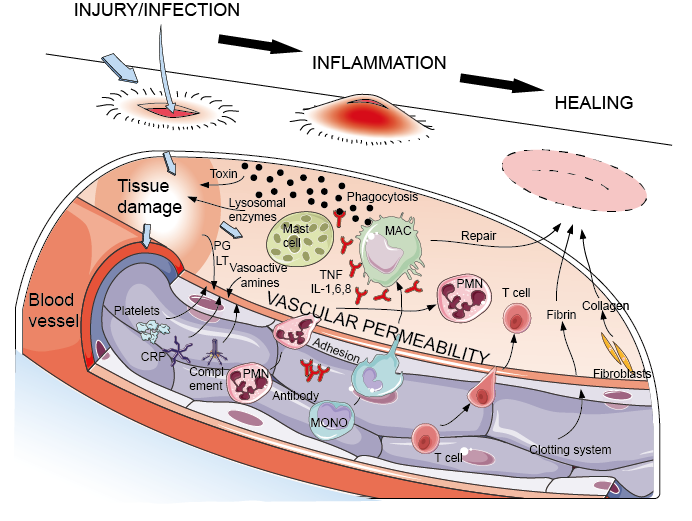
Inflammation is your body’s natural healing response. When you exercise, sustain an injury, or fight infection, inflammation isolates damage, clears debris, and initiates repair. It’s essential. Even everyday metabolism involves inflammatory signalling as part of normal tissue remodeling. Inflammation isn’t something to fear, unless it’s excessive and unable to resolve naturally.

The problem isn’t inflammation itself, the problem arises with unresolved inflammation. When the inflammatory process can’t complete its cycle, chronic issues develop. Inflammation can remain unresolved for several reasons, and the one which is most overlooked and underestimated is the relationship between structure and function.  Between body mechanics and physiology.  In other words, between how the body is moving/relating and what illness or symptoms it’s expressing.

The body clears inflammatory products through lymphatic drainage and blood flow, regulated by the autonomic nervous system. Sympathetic tone controls the calibre of the vessels.  When autonomics are normal, tissue perfusion balances with drainage. When sympathetic tone is inhibited, vessels dilate excessively, more fluid arrives faster than it drains, and congestion results.

Nerves, arteries, veins, and lymphatics (NAVL) travel together through fascial planes and tunnels in bones and between muscles.  Forces acting on your tissues (posture, injuries, repetitive strain, etc.) may compromise these pathways. Autonomic nerve function may be inhibited or distorted.  Nerves and ganglia can suffer from a toxic pH environment. Lymphatic and blood vessels can suffer from poor flow like a twisted hose.  This can lead to an insidious feedback loop that maintains a state of inflammation which only worsens over time.

Structural restrictions influence where the body’s self-regulation fails, where drainage is compromised, and where chronic inflammation persists. Individual body mechanics determine what symptoms might develop.

The body is an integrated physiological system.  Adequate blood flow and drainage depend on NAVL function which depends on structural integrity. Restoring function means addressing mechanical restrictions through precise manipulation based on physics and anatomy.  That’s Classical Osteopathy.

The answer to chronic inflammation is improving the conditions that allow your body to complete what it already knows how to do: inflame, heal, and resolve.

You’re Like an Economy

The human body is a complex economy unto itself.  Your body takes in resources, produces materials, it builds and destroys and renovates continuously.  It stores and uses resources it has acquired or crafted.  It makes different cell types, tissues, organs and systems that all combine into a dynamic unit of function: your living breathing conscious self.   This living economy sends messages and transports materials and waste to and from its cells in a continuous flow of life.

NAVL: The Rivers of Life

The anatomy of life’s communication and transportation is the nerve, artery, vein, lymphatic.  We call it NAVL (pronounced “navel”), and it largely travels in a neurovascular bundle through fascial tunnels, tubes and compartments. For example, the portal triad running to the liver through the hepato-duodenal ligament in the abdomen.  Or the carotid sheath in the neck, transmitting the vagus nerve, deep cervical lymphatics, carotid artery and internal jugular vein.  The NAVL also passes through openings like the aortic hiatus, vena cava or esophagus openings in the diaphragm.

Why does this matter? When these compartments are open and resilient, life flows. Oxygen and nutrients arrive. Waste is removed and disposed. The nerves are not irritated, autonomics are well balanced, and signals transmit clearly. Your cells, tissues, and organs have what they need to function, build, repair, and thrive.

Living is Stressful

Stress is the load we carry, and it’s unavoidable as a physical living being.  Work posture and repetitive motions, injuries, birth, and all the little bumps, knocks, and sleep posture each night – these create forces: compression, tension, torsion. Over time, the body compensates and adapts in a way that puts stress on the NAVL.  Most often it’s just a gradual effect over years and decades before major symptoms appear.  But all along, the rivers of life have been increasingly compromised, and any given industry in the body’s economy has been suffering in recession.

When resilience at the cellular level decreases significantly, with enough time it leads to health problems in tissues, organs, and systems. But it doesn’t have to be that way.

Your Weakest Link Breaks First

Which symptoms appear depends on your constitution: your body’s unique structural pattern, its physiology and its resilience to load, impact, and repetitive forces.

This is why the same structural distortion can lead to completely different diseases in different people; or the same disease between people can be the result of different structural distortions.  And that’s why thinking osteopathically, assessing and treating the structural relationships of the body, works effectively and has a good track record of finding health.

Restore the Flow

Classical Osteopathy is successful because it addresses this fundamental reality: health returns with renewed movement and normal relationships between structures, because that’s when the NAVL functions optimally.  Your body economy can restore and thrive as its self-regulating mechanisms work well again.

Structure isn’t separate from function. Structure determines what’s possible. When the rivers flow freely, health is the natural result. When the pipes get kinked, pathology is underway.

The Art & Science of Osteopathy

Clinical reasoning represents the intersection of art and science in Classical Osteopathy, where palpation becomes a diagnostic conversation with living tissue.

Three-Dimensional Reality

The body doesn’t organize in straight lines or single planes.  It forms tissues in spirals and helical patterns because that’s the easiest way to distribute and transmit forces through our 3D body, store and release elastic energy, etc.   Every restriction exists in three-dimensional space, creating force patterns that spiral through fascia, muscle, and bone. When tissues contract, twist, kink and fold like string under chronic loading, they generate torsional forces that literally screw bones into joints—the femur into the knee, the forearm into the elbow. These patterns don’t respect our anatomical compartments, and they significantly affect our fluid dynamics and nerve function over time.

Layers of Truth

Let’s acknowledge three distinct tissue layers, each telling its own story. The superficial fascial layer reveals thickening and adhesion in the extracellular matrix. Tissues that should glide against each other are stuck together, not moving, and creating fixed points that the body has to work around.  The intermediate neuromuscular layer exposes protective reflexes and gamma motor tone holding patterns.  The nerves are constantly sensing what’s happening with the muscle lengths, and then signalling restrictive muscle tissue.  The deep structural layer—bony, ligamentous, articular—shows how the frame’s parts are relating and how they’re stuck.  Sometimes the deep structure is following the superficial or intermediate layers, and sometimes they’re opposed to each other like a twisted sock over your foot.

Leverage, Fulcrum, and Force

Classical Osteopathy uses mechanical principles with precision. The fulcrum is your fixed point—where you want change to occur.  Leverage is whatever collection of tissue you use to generate force upon that fulcrum.  A short lever uses the same structure itself.  A long lever mobilizes distant structures, like depressing the shoulder to anteriorize the ninth rib, or pulling the arm to move the clavicle.  Force vectors, applied direct or indirect to barriers, provide the assessment to know what’s happening; and treatment is simply the appropriate amount of force to create the change.

Integration

Classical Osteopathy is not about techniques and manipulation, it’s not a modality.  Sure, you need some form or technique to untangle a necklace, hammer a nail, or use a screwdriver.  The tools in Osteopathy are the leverages, and the techniques are simply how you use your leverage: your handling, your footwork, etc.  The art and science of Osteopathy means having a dialogue with the body using the language of leverage and fulcrum, understanding its truth, and addressing the reasons it’s suffering.

Osteopathy is Philosophy

What distinguishes Osteopathy from everything else?  Ultimately, Osteopathy is a way of thinking.  But what does that even mean?

Everyday examples demonstrate what it means to think osteopathically.  These examples reveal why thinking osteopathically is more familiar than you might realize.

When you’re putting the fitted bedsheet on your mattress and you’ve got 3 of the corners on, you don’t just keep pulling the tight 4th corner trying to get it over the mattress. That’s a recipe for torn fibres at worst, or simply a losing battle at best.  Instead, you step back, assess the whole sheet, and gather some slack from the other corners first. Then you can successfully pull that 4th corner over the mattress.

When your shoelace is knotted, you might push the tangled parts closer together to be able to undo the knot.  Or with a stuck drawer you might search for and remove the scissors obstructing the drawer from sliding open.

This is osteopathic thinking: understanding structure and function, recognizing when something is abnormal, and bringing it back towards normal.  Each according to its unique case.

Think Like an Engineer, Work Like a Mechanic

Whether you’re dealing with a kinked garden hose, a stuck drawer, or tangled necklace, the approach is the same. You need to understand what you’re working with, know how it’s supposed to work, and recognize when something’s not right. Then you can figure out how to restore it back to normal.

Classical Osteopathy: A Mechanic for the Human Body

Classical Osteopathy applies this same systematic thinking to human anatomy. The human body, as a living system, is self-healing and self-regulating when it’s functioning properly. But inevitably, like that fitted bedsheet or kinked hose, restrictions develop and prevent normal function.

Classical Osteopathy assesses the body’s motion restrictions – not just where symptoms appear, but the whole lesion pattern of tensions, compressions, torsions. This philosophy understands that a shoulder problem might be like that 4th bedsheet corner: the real reason it got injured isn’t because it was weak per se, and the way to rehab it is to work with the entire body from global to local to focal.

Osteopathy reestablishes proper relationships, allowing the body’s own healing mechanisms to function.   Your body behaves like a twisted string, and the philosopher’s way is in finding the path to unwind it.  Osteopathy is an empirical, dynamic, responsive hands-on thought process based on principles of natural law, it’s not a passive theoretical mental exercise.  Osteopathy is a problem-solving exercise using asymmetry, tissue texture, motion restriction, guiding the philosopher to find it, fix it, and then leave it alone.

You’re like a string

What happens to a string when you twirl it?

Twirling a string reveals fascinating physics. First, the string shortens as fibers wind tighter. Keep twirling, and it begins to kink and loop; the torsional energy becomes so high that folding becomes more favourable than staying straight. Continue further, and the string plies, folding back onto itself. This creates a doubled section thicker, stronger, and more rigid than the original.

How does this apply to the human body?

Myofascial tissues follow these exact same principles. The fibrous networks of muscle and connective tissue behave just like that twisted string. Through the act of living, like driving a car, the body takes on wear and tear to varying degrees.  As the normal relationships between some structures become abnormal, like twisting strings your body’s fibres develop torsional loads that create restrictions, bundling, folding. Essentially forming “kinks” in your body’s fabric that you might experience as trigger points and pain.

So how do we unwind these patterns?

In the philosophy of Osteopathy,  we think like engineers and work like mechanics, using precise levers, vectors, fixed points, and forces (compression, tension, torsion, oscillation, etc). Rather than rubbing, scrubbing, and digging into kinks, we understand the anatomy and physics involved in a lesion pattern through assessment.

As layers release through treatment, whatever tissues and movements stay most restricted reveal the core lesion pattern driving everything. This is like archaeology – the body holds all kinds of artifacts.  Osteopathy’s skill is piecing together the truth based on the evidence.

What makes this approach so effective in healing?

Classical Osteopathy works based on natural principles of physics and human anatomy.  As I assess the unique person on the table I’m guided by the way your body moves and responds.  By unwinding the string it loosens, relaxes, and straightens out.  Based on the same principles, I find how you’re wound and I unwind you.  Your body’s self-healing mechanism takes over once obstacles are removed. That’s how Osteopathy helps facilitate long-lasting changes.  Over time, movement returns, constitution and vitality improve, tissues heal, and the neuromuscular system can finally let go of protective holding patterns that act like the twisting force on a string.

You’re Like a Bridge:

Understanding Osteopathy Through Mechanics

Think of a suspension bridge spanning a vast river. Every cable, beam, and support works in perfect harmony, distributing forces and maintaining structural integrity under constant stress. Your body operates on the same fundamental principle: you are a living, breathing human being, masterfully engineered to function within the physical world.

Classical osteopathy recognizes and pursues this mechanical reality.  The human body is structure and function simultaneously.  It’s subject to gravity, torsion, compression, and tension every moment of our lives. When a bridge develops structural weakness, engineers don’t just patch the surface, they address the underlying mechanical relationships. Similarly, when dysfunction occurs in the human body, it’s often because these mechanical relationships have become compromised, creating patterns of stress that ripple through the entire system, leading to pain and illness.

The osteopathic approach works directly with your body’s anatomy, using levers and fulcrums to assess and treat the mechanical abnormalities. Your body, like a bridge, should respond predictably under specific forces or movements.  This is the essence of osteopathic assessment, and the treatment is about the application of force to the barrier.  For example, your knee hurts and your lumbar region is stuck in the sagittal plane, not moving well, your pelvis is twisted around a vertical axis.  The treatment could involve a long lever, your leg, being used to bring the forces to the barrier of your lumbar and pelvic restrictions, and ultimately restore movement to those structures and better relationships between them.

With precise understanding of human anatomy and mechanics, using skills of palpation and motion testing , osteopathic practitioners use leverage to restore proper mechanical function and relationships. A fulcrum applied at the right anatomical structure combined with the correct force vectors or movement patterns will make changes that matter, changes that can last over time and restore the natural movements that keep your body in good health.

By working with the mechanical principles that govern all physical structures, Osteopathy helps your body rediscover its innate capacity for health and normal function.  Experience the difference when your body’s engineering is working as nature intended.

Sun & Moon Integrated Wellness is Now Offering Registered Psychotherapy!

We’re happy to formally introduce Colleen into the psychotherapy profession!!

Transform Your Life with Gestalt Therapy: 5 Benefits You Need to Know

As holistic practitioners, we understand that true wellness involves treating the whole person, not just their physical symptoms. That’s why we’re excited to introduce psychotherapy as a new addition to our clinic’s services. One type of psychotherapy we specialize in is Gestalt therapy, which focuses on the present moment and the individual’s experience of their own feelings and perceptions.

Here are five common issues that Gestalt therapy can treat, and the benefits you can expect as a client:

  1. Anxiety and depression – If you struggle with these common mental health concerns, Gestalt therapy can provide a safe space to explore your feelings and work through your challenges. Through increased self-awareness and emotional regulation, you can experience greater peace and resilience.
  2. Relationship issues – Whether you’re struggling with romantic partners, family members, or coworkers, Gestalt therapy can help you navigate difficult interpersonal dynamics. By developing communication and boundary-setting skills, you can cultivate more fulfilling and supportive relationships.
  3. Stress and burnout – In today’s fast-paced world, stress can quickly take its toll on our physical and emotional wellbeing. Gestalt therapy can help you identify and manage the sources of stress in your life, and cultivate greater resilience and self-care practices.
  4. Trauma and PTSD – If you’ve experienced traumatic events in your life, it’s common to feel overwhelmed or stuck in your emotions. Gestalt therapy can help you process your trauma and find new ways to heal and move forward.
  5. Self-esteem and personal growth – Gestalt therapy can provide a powerful opportunity for personal exploration and growth. By developing a deeper understanding of yourself and your patterns, you can cultivate greater self-acceptance and confidence, and achieve your personal and professional goals.

As a Gestalt psychotherapist, I offer a compassionate and non-judgmental space to explore your concerns, and work collaboratively with you to develop a personalized treatment plan. Through a combination of talk therapy, body awareness exercises, and mindfulness practices, I can help you achieve greater clarity, balance, and fulfillment in your life.

If you’re ready to take the next step on your healing journey, I invite you to explore the benefits of Gestalt therapy at our clinic. With our holistic approach and experienced practitioners, we can help you achieve optimal health and wellbeing, inside and out.

Click here to see our therapists

Experience the Benefits of Osteopathy

A Holistic Approach to Health and Wellness

Osteopathy is a holistic form of manual therapy that is becoming increasingly popular as people are discovering its many benefits. It is a gentle, non-invasive treatment that uses a combination of massage, stretching, and joint mobilization techniques to help the body heal itself.

It focuses on treating the whole person, not just specific symptoms. If you’re dealing with chronic pain, limited mobility, or other health issues, osteopathy might be the solution you’ve been looking for. Here are a few key benefits of osteopathy:


Pain Relief: One of the primary goals of osteopathy is to alleviate pain, whether it’s caused by an injury, chronic condition, or simply poor posture. Osteopathic Manual Practitioners use a variety of techniques, including soft tissue manipulation, joint mobilization, and gentle stretching, to help reduce pain and inflammation.

Improved Mobility: Osteopathy can also help improve your range of motion and overall mobility. By addressing underlying structural imbalances and releasing tension in the muscles and joints, practitioners can help restore proper alignment and movement patterns.

Better Circulation: Osteopathy is also beneficial for improving circulation throughout the body. By reducing restrictions in the soft tissues and joints, blood and other fluids can flow more freely, promoting better nutrient and oxygen delivery to the cells and tissues.

Stress Reduction: Osteopathy is a gentle, non-invasive therapy that can help reduce stress and tension in the body. By promoting relaxation and reducing muscle tension, osteopathic practitioners can help calm the nervous system and improve overall wellbeing.

Improved Digestion: Did you know that osteopathy can also help improve digestion? By addressing imbalances in the musculoskeletal system and reducing tension in the abdomen, osteopathic practitioners can help improve the function of the digestive organs and alleviate digestive issues like bloating, constipation, and acid reflux.

Overall, osteopathy is a safe, natural, and effective way to achieve optimal health and wellness. Whether you’re experiencing pain, mobility issues, or just looking to improve your overall health, osteopathy may be the solution you’ve been searching for.

Click here for a certified practitioner

Finding Health Through Osteopathy

When you see a cut or scrape healing you know your body’s self-healing nature; and considering hunger, sleep and all the other bodily functions, you know that your body regulates itself.  It is the work of nature as a living process: the body naturally finds health.

Sometimes the body needs help to find health.  Its communications and processes can be obstructed or restricted, or facilitated and hyperactive. 

Osteopathy provides a thoughtful approach from a holistic perspective.  For common musculoskeletal symptoms like pain & mobility issues, and all sorts of other health-related symptoms & problems, classical Osteopathy can make the difference.

Using leverage and fulcrum to assess and treat the collective anatomy, Osteopathy respects physics and biomechanics, thinks about them and uses them to find health.  

Osteopathy offers a gentle, firm, effective approach to integrative wellness.  It is about bringing motion and communication to the tissues, especially for the flows of the nerves, arteries, veins, lymphatics.  These are the rivers of life.

This November at Sun & Moon Integrated Wellness we are offering complementary assessment sessions with Julian. Come learn how Osteopathy can contribute to your health and healing for ailments such as sore back, digestive issues, and much more. Visit the booking page to schedule your free intake & assessment.

(by Julian Lobo)

Meditate better with Complete Breath

Nature is full of rhythm.  Human anatomy demonstrates many rhythms of life, for example walking, and breathing.  These are modulated by your nervous system, on an unconscious, reflexive level.  Your nervous system can also modulate itself by its own conscious ability.  This means, you can “control” your breathing rhythm too.

Forms of yoga and other meditative “energy training” like qi gong (chi kung) & tai chi use breath control to one degree or another.

Breathwork starts with breath awareness.  After that, there are many possibilities.  One way to work with your breathing is to work on the ratio of inhale:exhale.  The most balanced would be an even ratio, for example 5 seconds inhale : 5 seconds exhale.  After that, a next step would be to increase the length/time.  As a rule, always proceed patiently, and dyodd.

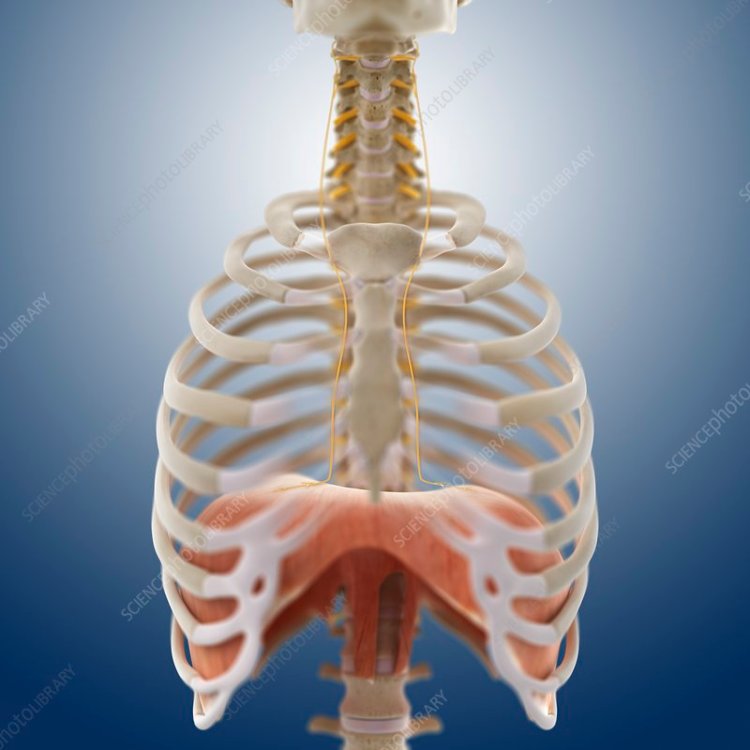
Whether unconscious involuntary or intentional voluntary breathing, how does your nervous system control your breathing?  The simple answer is: it innervates your muscles that move your tissues to change the pressures in your thorax, resulting in inhalations and exhalations, aka respiration.

The rhythm of breathing is modulated in the brainstem.  The nerve impulses pass to the various muscles that facilitate the inhalation, foremost the respiratory diaphragm.  Exhalation is usually passive, meaning it is the result of the muscles ceasing their contraction, plus the recoil of the tissues that were on stretch (for example the lungs).  Exhalation can also be active, where voluntary impulses are sent to muscles that compress the abdomen and thorax.  These facts lead to the wide variety of yogic breathing practices that have been developed.

Breathwork continues to become increasingly popular.  For years Tony Robbins has used and promoted breathing exercises he does each morning.  Wim Hof is on the minds and lips of many people too these days.  And many fitness enthusiasts are now familiar with the “stomach vacuum”, or what yogis know as uddiyana.  The prevalence of meditation in our collective consciousness (compared to where it was 20 or 30 years ago) is inspiring.  Breathwork is a next step.

Meditate better with Complete Breath.  If you’re interested and curious for more, on June 17 at 3pm I will be leading a 90-minute online workshop hosted by Beaches Hot Yoga using Zoom videoconference.  You will learn some fascinating anatomy relating to the respiratory diaphragm, be introduced to the concept of using your breathing muscles strategically, and we will apply this breathwork to a yin yoga series.

-Julian